
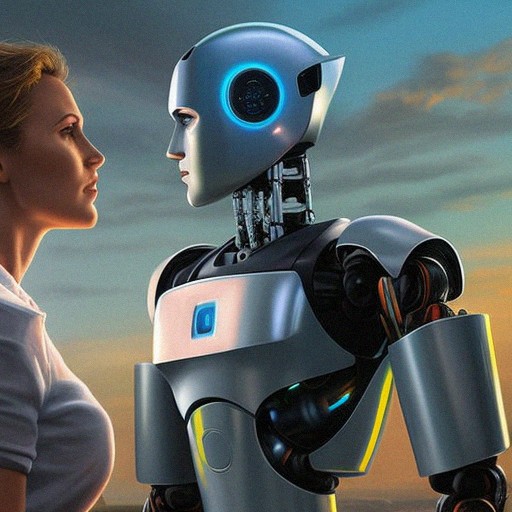
It seems as if all we’ve been talking about since Chat-GPT emerged into the public consciousness last autumn is the rise of artificial intelligence (AI) and how it may or may not be coming for our livelihoods. At the one extreme we have pessimists sharing their dire warnings of AIs coming to take our jobs away and at the other extreme the optimists are telling us AIs/robots will augment people and usher in a new workplace paradise. My guess is that it will prove to be somewhere in between. The challenge is that we need time to work through how to take advantage of AI, time that we won’t have if we don’t fight back now.
The Guild Fights Back
One such example of fighting back can be found in the movie industry. On March 22nd The Hollywood Reporter shared that the Writers Guild of America (WGA) is pushing back against the use of AI in its negotiations with studios and streamers. Their position is that AI has no role in guild-covered work, nor does it have any claim on IP rights, nor should it be given credit for any such work. They’re taking this position to protect their members because they’re already seeing AI making inroads into their space. One such example is the Deep Learning South Park episode, that aired on March 8th. This episode explores the potential societal impact of AI in their own unique South Park way and credits Chat-GPT as one of the writers of the episode.
The WGA is fully aware of the potential threat that AI has for creatives, including the writers under their protection. Regardless of the claims of AI optimists, generative AI is having an impact on the ability of creatives to earn a living, and now that GPT-4 has arrived that will only get harder. We’ve seen how platforms such as Chat-GPT offer the potential for AI-assisted writing (I did not leverage AI in the writing of this article), platforms such as MidJourney and DALL-E to produce artwork (I used DALL-E to produce the artwork for this article), and platforms such as Amper Music and Soundful to generate music. The AI industry clearly has creatives in their sights, and the creatives have taken notice. Luckily this group of writers has someone to fight for them, but many others don’t.
But… AI Clearly Has A Role

In practice people within the movie industry seems perfectly fine with applying AI to augment their efforts. The computer generated graphics (CGI) in many of my favourite films certainly use AI and have been doing so for years. One of the feel-good stories of 2022, and rightfully so, was that Val Kilmer worked with Sonantic to create an AI-generated voice for him for Top Gun 2. Similarly James Earl Jones has provided the rights to early recordings of his voice for AI generation, enabling Darth Vader to live on. In both cases the actors chose to do this and benefited from doing so. The point is that AI clearly is playing a role in the movie industry and always will. The primary questions are what will the level of augmentation be, and how will that augmentation be allowed to increase over time (and you can take it to the bank that it will).
People Need Time to Understand the Impact of AI
I think it is an incredibly smart move for the WGA to make a stand now, while they have the opportunity to do so. Their members need time to explore and absorb these new technologies, and eventually to find a balance with this wonderful set of tools that they’re being provided. They won’t be able to avoid AI, but they will hopefully survive it. In the spirit of full disclosure, I am not a member of the WGA, nor have I been one in the past, nor to I expect to be one in the future. I do wish them well though.
Lee Child once wrote “hope for the best, plan for the worst”. So let’s hope for this augmented paradise but do everything that we can to prevent our jobs from being eliminated through automation in the mean time. The time to start fighting back is now. Taking a stand before you’ve been replaced is far easier than taking a stand after you’ve been replaced. If you’re unionized, engage in discussions with your union representative about what they’re doing to help you navigate the coming changes from AI adoption. If you’re not unionized, now may be the time to consider doing so. Failing that, start learning about AI and how to apply it to augment your own work practices – get ahead of the curve.
6 Comments
Katie Smith
I appreciate your article and agree with several points. However, I must know how you rationalize the use of generative AI for the artwork used in this article? Thank you
Scott Ambler
Great, and very fair, question. Yeah, I’m not perfect. I wrote something about this a few years ago but can’t quickly find it (if you were to ask ChatGPT it’s probably ingested it and would spew some of it back in answer to your question). Short story is that the artwork is a nice to have that I wouldn’t pay for if I couldn’t get it for free. Yes, it’s effectively stolen material.
The challenge is that anyone who produces digital assets, and then publishes them online, needs to recognize is that their work will be ingested by multiple AI vendors. Is that right? No. Is that happening? Yes. Can we stop it? Very likely not.
The situation that we find ourselves in is very similar to software pirating in the 80s and 90s. The software vendors were blatantly ripped off by people. For example, everyone just had to get a copy of Lotus 123, or MS Word, or Flight Simulator, or many others. It was theft, but it was also an aspect of market share. Their software was worth stealing, and that helped them to be successful. Lotus benefitted from people using their products at home because some of those same people used legal copies at work.
However, the difference is that everything that the LLM vendors can access is being stolen and it isn’t always clear what the source is. Back in the day people had to copy all of Lotus 123, not just a few lines of code that were then combined with code from other sources to create brand new software.
Some creators (artists, authors, …) will benefit if their work is identifiable when people hire them to generate the real thing for their work that they had generated/stolen via an LLM. For example, I’m not going to pay anyone to generate artwork for my blog. Ever. I don’t generate money from my blogs nor do they benefit greatly from the artwork that I generate. But I am going to pay an artist to create a book cover for me because I will generate a bit of money from book sales (hopefully enough to cover the cost of the artwork) and because a good cover does increase sales.
Marcy Erickson
AI will never be really controlled for the greater good. I hate it. Disrespectful copying
Allen
AI ideas was already wrote out to us in many forms and ways that “Making” new life as a robot and giving it a conscious is beyond very dangerous.
Its already dangerous enough we dont know what maniac manifest in their minds about doing the worst to their next victim.
I wouldnt ever want AI to become a sentient being, Pandora boxes are as they should be.
“REMAINED CLOSED”.
To smart for your own good can really end every new generation ahead. If we are going to be extinct, Then let it be natural.
Dont kill everyone by still being curious after being warned.
Just because if anyone is hating another human, doesn’t mean you should force this as an answer. Or just make 1 for yourself and be done with that project. The world is annoying and this AI idea is just being dropped on us over someone that needs to wake up. The curious scientist will end the world before the world ends itself. Now you want the robot to live like a human. This has to stop
Elijah
When did you publish this? I need it for a school projecy
Scott Ambler
2023/03/23 at 7:07 pm